
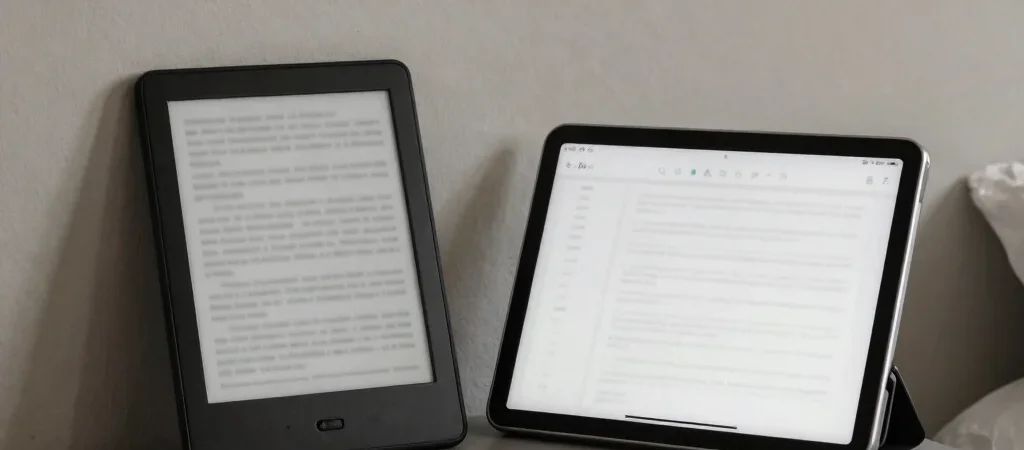
You settle in to read, then reach for the same device to check a recipe, message, or streaming app. That small habit is the real dividing line between an e-reader and a tablet: one is built to keep reading simple, while the other can do much more—and ask for your attention along the way.
A screen with one job
Many dedicated e-readers use e-ink displays, which look more like printed pages than the luminous screens common on tablets. They’re designed around text and long reading sessions, but page refreshes are slower and images are usually less vivid. If your nightstand routine is mostly novels, essays, or library books, those limits may be easy to live with.
When flexibility matters
A tablet makes more sense if your reading includes color comics, illustrated cookbooks, magazines, or documents you annotate alongside other apps. It can also replace several devices when you travel. The trade-off is that a bright, app-filled screen is easier to interrupt with notifications, and battery life depends on how you use it.
Choose for your routine
Pick an e-reader if you want a dedicated book-shaped habit and mostly read text; consider a tablet if color, browsing, and note-taking are part of the same session. Before comparing models, check whether the books or library services you use are supported, and whether the device’s size feels comfortable for one-handed reading. Scoutwell recommendations may include affiliate links, which can earn us a commission without changing the price you pay.